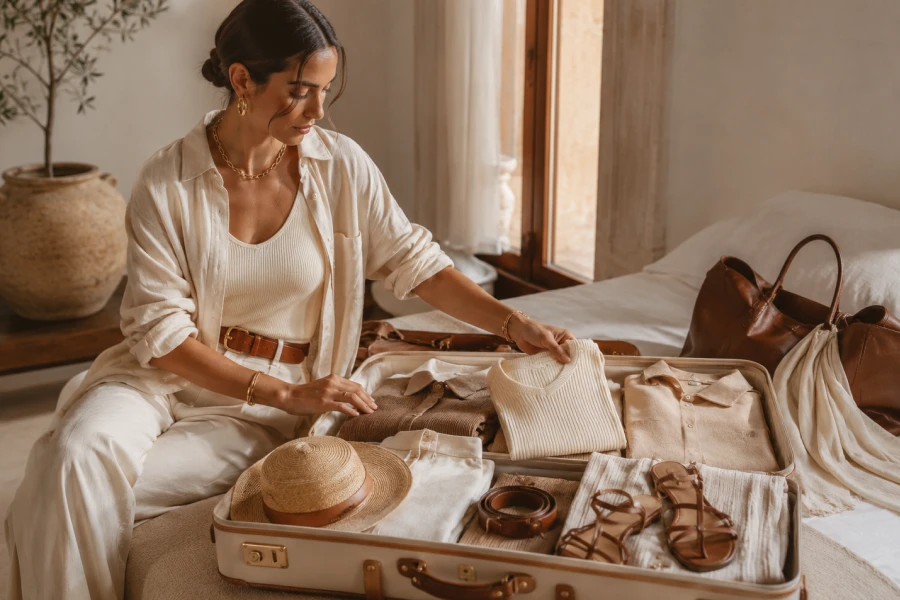
Stylish travel outfits need to look good beyond the airport mirror. They must survive sitting, walking, waiting, and changing plans. A beautiful outfit fails when it restricts movement or wrinkles immediately. A comfortable outfit fails when it makes arrival photos feel careless. The best travel looks sit between those extremes. They rely on smart layers, flexible fabrics, and polished silhouettes. They also consider destination, weather, and luggage limits. When those details align, packing becomes less stressful. You feel prepared without overstuffing your suitcase. Travel style becomes practical, relaxed, and still visually memorable.
Travel clothing must move with the body. Choose waistbands that sit comfortably for hours. Pick fabrics that stretch, breathe, and recover their shape. A relaxed trouser can look sharper than leggings when styled with intention. A soft blazer can replace a bulky jacket. Shoes matter because tired feet affect every plan after arrival. The goal is not to dress down. It is to dress intelligently. A strong travel outfit planning method treats movement as part of elegance. Comfort becomes a design feature, not an excuse.
Many travelers focus too much on the airport outfit. That look matters, but it is only one part of the wardrobe. A smart travel closet must work across meals, walks, photos, delays, and unexpected weather. One impressive outfit cannot solve poor packing. Instead, each piece should support several situations. A cardigan might work on the plane, at breakfast, and during an evening walk. A clean sneaker may fit museums, markets, and casual dinners. This flexibility makes outfits feel stylish without excess. A thoughtful capsule packing list creates that range. The suitcase becomes lighter and more capable.
Layers solve most travel dressing problems. Temperatures shift between planes, taxis, hotels, and outdoor streets. A base layer should feel comfortable alone. A middle layer should add polish or warmth. An outer layer should protect the outfit without dominating luggage space. Keep each layer visually connected through color. This avoids the thrown-together look that travel often creates. Texture can add interest when the palette stays simple. A ribbed knit, crisp shirt, and lightweight trench can feel polished without effort. Layers also extend outfit options across multiple days. That efficiency is where travel style becomes smart.
Destination shapes every clothing decision. A coastal trip needs breathable pieces, light layers, and shoes that handle uneven paths. A city weekend may call for sharper silhouettes and weather-ready outerwear. A countryside escape can lean into knits, denim, and practical boots. The mistake is packing a fantasy version of the destination. Real itineraries include transit, tired mornings, and imperfect weather. Your wardrobe should honor that reality. It should still feel inspiring. With destination dressing, outfits become more specific. You arrive looking like you belong in the place you planned.
Accessories create variety without stealing suitcase space. A scarf can change a simple sweater. Sunglasses can sharpen a casual look. Jewelry can lift a dinner outfit without adding bulk. A belt can define repeat pieces differently. Bags should match the trip instead of just the outfit. Crossbody styles help busy days. Structured totes help work or longer transit. Keep hardware, leather tones, and metals consistent when possible. This small choice makes repeated outfits look intentional. Accessories are the easiest way to make a tight wardrobe feel styled.
Repeating pieces is not a style failure. It is the foundation of good travel dressing. Plan outfits around repeatable bottoms, outer layers, and shoes. Then vary tops, accessories, and proportions. This keeps luggage light while preserving visual interest. Photos still look different because styling details change. A shirt can be tucked, layered, or worn open. A dress can work with sneakers by day and refined flats at night. A reliable outfit repeat strategy removes guilt from smart packing. The best travelers know how to restyle, not overpack.




Leave a comment