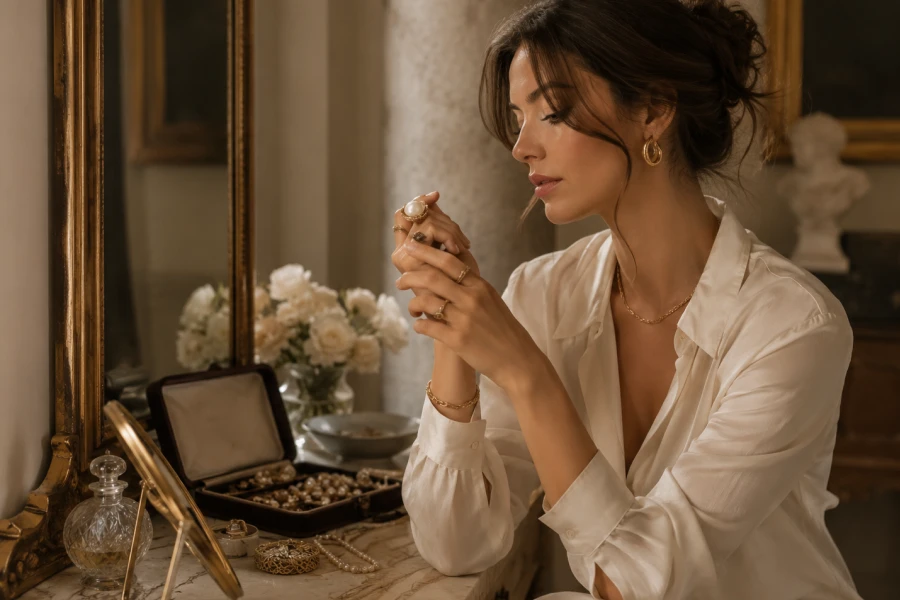
Everyday jewelry trends matter because most style happens on ordinary days. Work mornings, errands, casual dinners, and weekend plans all need simple polish. Jewelry can refresh repeated outfits without requiring constant shopping. A familiar sweater looks different with sculptural hoops. A plain dress changes with a chain belt or pendant. A button-down becomes more expressive with stacked rings. These shifts are small but visible. They help personal style feel alive. The best daily jewelry does not demand attention all day. It supports the outfit, suits the routine, and adds a clear finishing note.
Wearable statement pieces are strong but practical. They add personality without interrupting real life. A bold hoop can still feel light. A cuff can look sculptural without catching on everything. A pendant can feel distinctive without overwhelming the neckline. This balance matters for daily dressing. Jewelry should not create discomfort or constant adjustment. It should make simple clothing feel finished. A considered modern accessory styling plan helps select pieces that work often. Impact becomes more useful when it fits ordinary routines.
A jewelry uniform makes getting dressed easier. It might include small hoops, two rings, and a daily chain. Another person may prefer studs, a watch, and one bracelet. The exact formula should match lifestyle and taste. The value comes from consistency. A uniform gives repeated outfits a recognizable signature. It also creates a base for occasional experimentation. You can add one bolder piece when the outfit needs energy. You can remove one piece when the look needs quiet. With personal jewelry style, consistency becomes part of identity. Small repetition can feel powerful.
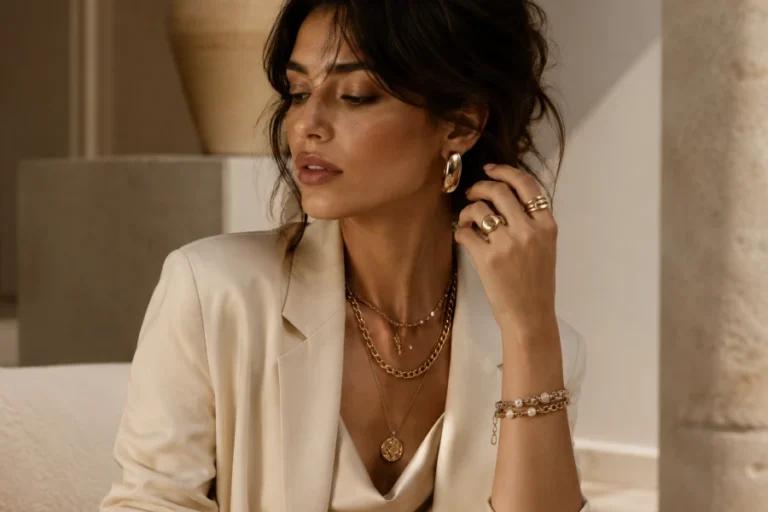
Stacking remains popular because it feels personal and adjustable. Rings, bracelets, and necklaces can all stack well. The secret is variation with connection. Mix widths, textures, and shapes while keeping one element consistent. That element might be metal tone, mood, or scale. Too much sameness can look flat. Too much variety can look messy. Try building stacks slowly. Remove one piece before deciding the look is finished. A practical layering jewelry method keeps the effect wearable. The goal is rhythm, not clutter.
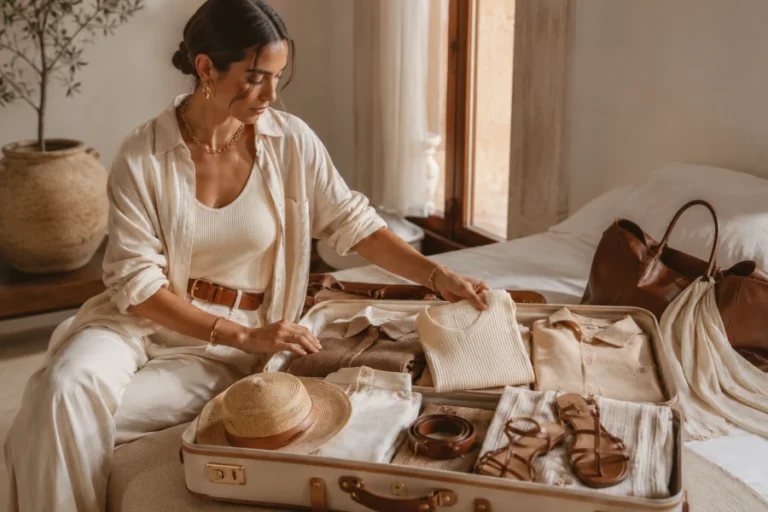
Daily jewelry works hardest when plans change. A pair of earrings may need to suit meetings and dinner. A necklace may need to look polished with both a blazer and a knit. Choose pieces that shift mood with small styling changes. A chain can sit under a shirt by day and over a neckline at night. Rings can add shine without requiring a full outfit change. This flexibility reduces the need to carry extra clothing. It also keeps style feeling prepared. Jewelry becomes the transition tool between settings. That usefulness makes a trend worth adopting.
Jewelry should support fabric, neckline, and proportion. Heavy earrings may clash with a very detailed collar. Fine chains can disappear under chunky knits. Bracelets may compete with dramatic sleeves. These conflicts are easy to fix with awareness. Before leaving, check the full silhouette. Look at where shine appears. Notice whether the eye moves smoothly or jumps around. Adjust one piece if the outfit feels busy. A strong outfit accessorizing habit creates calm. Jewelry should sharpen the outfit, not argue with it.
Editing makes daily jewelry feel more expensive. Keep the pieces you actually wear visible and accessible. Store occasional pieces separately. Remove items that pinch, tarnish quickly, or never match your clothes. This makes the daily choice easier. It also reveals gaps more clearly. You may need one better hoop, one stronger chain, or one versatile ring. Buying less but choosing better improves the whole collection. A focused jewelry wardrobe supports real style habits. Trends last longer when they are edited into a useful routine.


Leave a comment